Hamburger Kunsthalle
BUT I WORLD I SEE YOU*
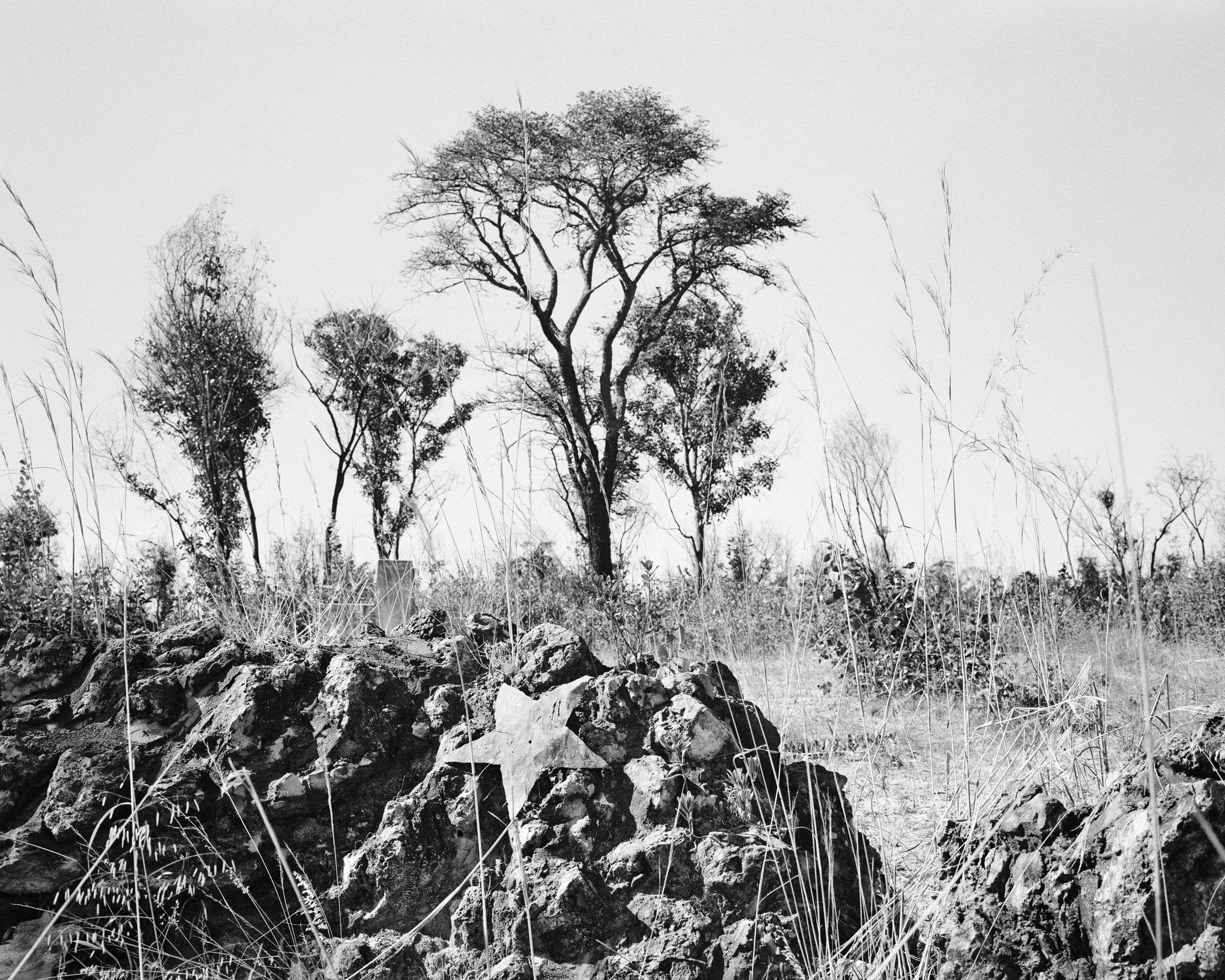
As part of the larger context of the 9th Triennial of Photography Hamburg 2026, the exhibition BUT I | WORLD | I SEE | YOU will present works by more than 40 international transgenerational artists. The opening chapter deciphers (sepulchral) landscapes and culture of obsolescence imbued with historical memories and informed by personal experience, myth, and ideology, or how significance affects the images’ overall latent meanings. It will present photographs, sculpture, 16mm film and video such as Henry Fox Talbot’s The Haystack (1844) with a leaning ladder; Henri Becquerel’s scientific images Phosphorescences invisibles and Beta Ray; an image of a ladder and a sentry blown and imprinted on a wall by the flash of the atomic bomb dropped on Hiroshima; Hiromi Tsuchida’s ARBRE Pin, Camphrier, and Cerisier; On Kawara’s Thanatophanies; Paul Graham’s Corrupted Cherry Blossoms; Pierre Huyghe’s Dance for Radium; Alina Szapocznikow’s Photosculptures and Tumeurs series; Santu Mofokeng’s trauma or polluted landscapes where human and geographical bodies are forced to undergo a gradual metamorphosis; Jo Ractliffe’s Terreno Ocupado and As Terras do Fim do Mundo of Angola’s landscapes and leftovers; Tacita Dean’s Kodak and The Tail End of Film; Willie Doherty’s Secretion; and the phonetic poem of Raoul Hausmann’s The Man who is Afraid of Bombs.
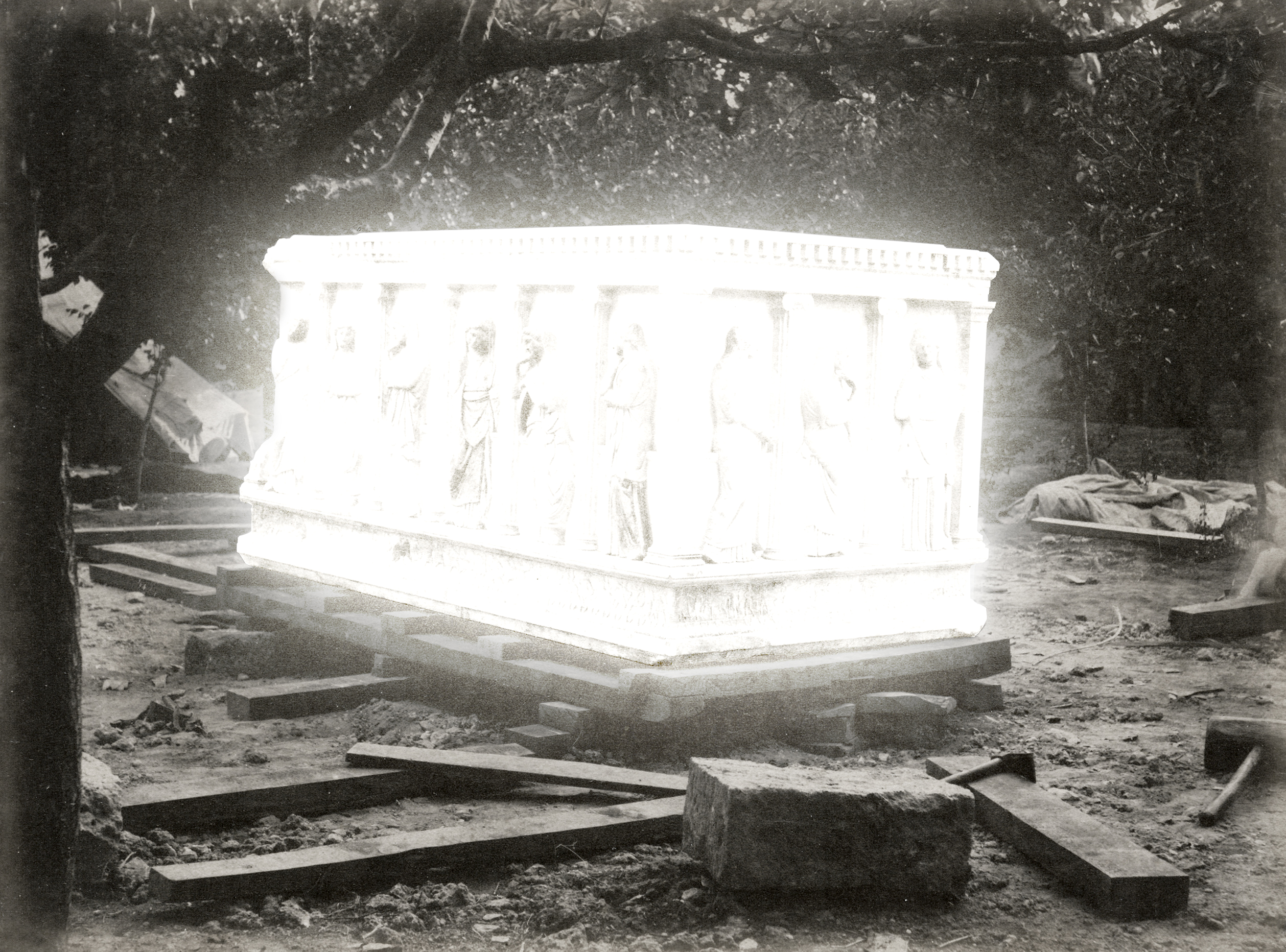
The haystack—a campaign recitative—reveals the very regime of appearance of objects whose vertigo Duchamp’s ready-mades will accomplish, for there is a kinship between ready-mades and photography that is both obvious and obfuscated. The exhibition’s second chapter explores how artists such as Marcel Duchamp, Alfred Stieglitz, Richard Hamilton, Marcel Broodthaers, Paul Thek, Dieter Roth, Sherrie Levine, Walid Raad, Jean-Luc Moulène, Emilio Prini, Fischli & Weiss, and Seher Shah use drop shadows, optical devices, artefacts and photographic appropriation to record the states of forms and to serve as a matrix, a constitutive vehicle for the organization of ideas, for an ecology of attention. They share processes that reintroduce object and photography to the play of narrative and emancipate the images from their signifying original environment, extracting a kind of photographic unconscious.
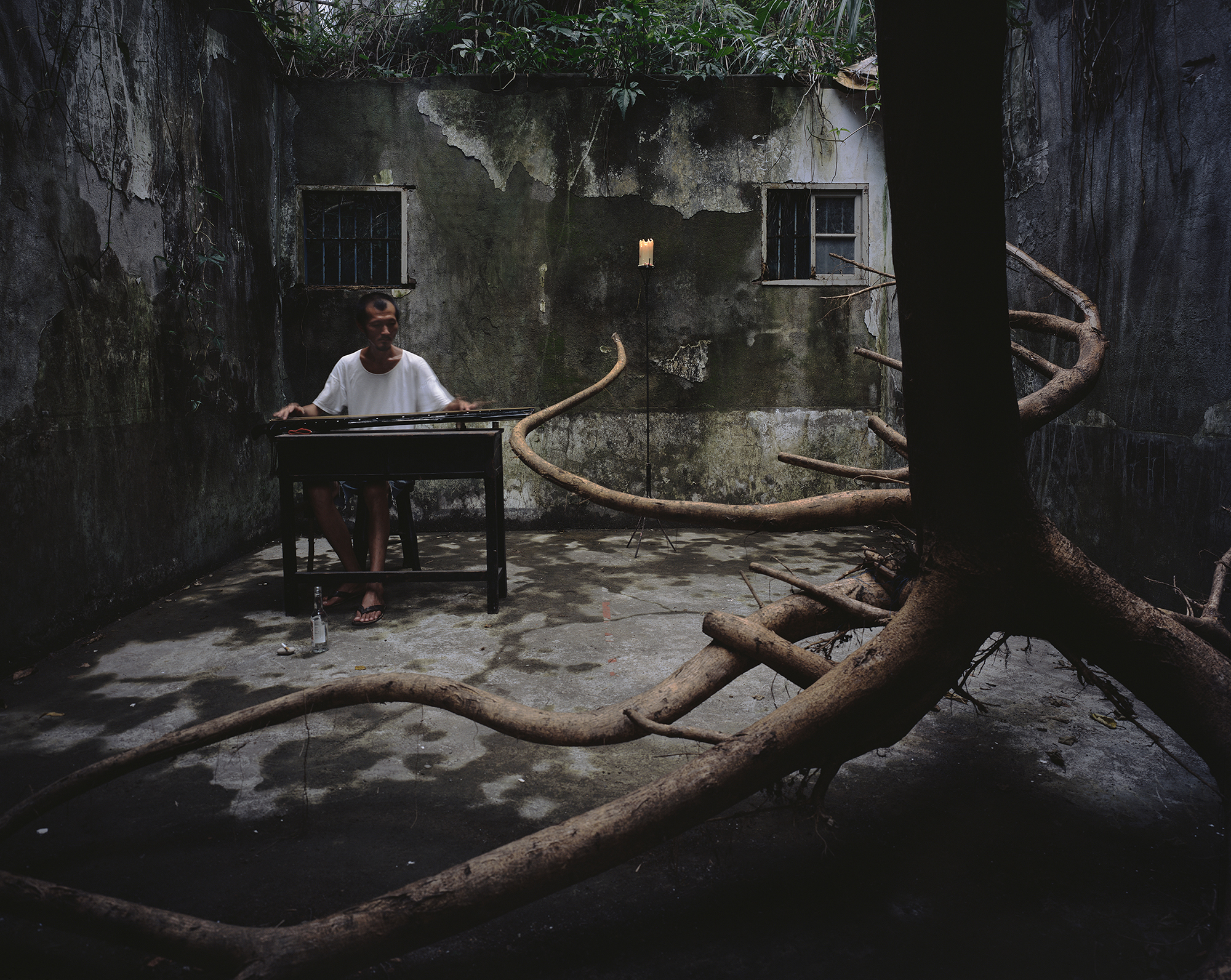
The exhibition’s third and closing chapter concentrates on protocols, image treatment, and the production of objects of historical and poetic evocation—or how artists investigate and translate constitutive gestures, photographic or archeological material, and artifacts within their own practice—that establish new relationships with memory, intimacy, and the archive. By tracing, activating, and entwining sources, the artists question the status of the image and “reinterpret what art does or what makes art” (Jacques Rancière). In proposing embodied and emotional experiences where aesthetics and politics are indissociable, their artworks render visible the interplay between colonial histories and the present day, labor and traditions, and documents and imagination. They all are identifying folds in the content of photographs: the details that reveal something about a picture, each time unfolding the historical sediments. With artists Tina Modotti, Bahman Jalali & Rana Javadi, Hannah Darabi, Akram Zaatari, Sigmar Polke, Rosemarie Trockel, Helen Chadwick, Deana Lawson, Karimah Ashadu, Mario García Torres, Yeh Shih-Chiang, Yeh Wei-Li, Saâdane Afif, Yto Barrada, Flaka Haliti, Taysir Batniji, Laura Henno, and Khadija Saye.
The Hamburger Kunsthalle will also collaborate with the Kampnagel International Summer Festival 2026 with the presentation of Nan Goldin’s iconic slideshow The Ballad of Sexual Dependency from the museum’s collection, the performance Monsters of Circumstances (German Premiere) by choreographer Xavier Le Roy, and a newly commissioned performance by Saâdane Afif and Augustin Maurs, King Coal Laments / Musiques pour Tuyauterie.
Preview