Deichtorhallen Hamburg –
PHOXXI. Temporary House of Photography
Akosua Viktoria Adu-Sanyah / Abdulhamid Kircher
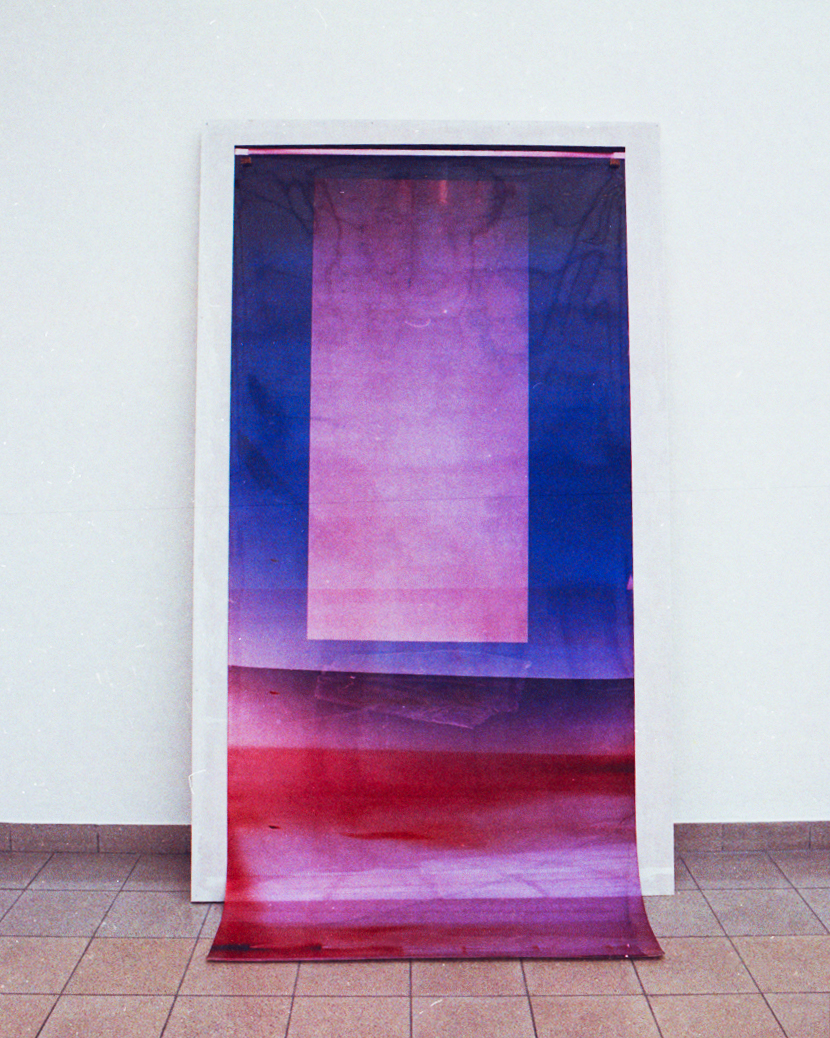
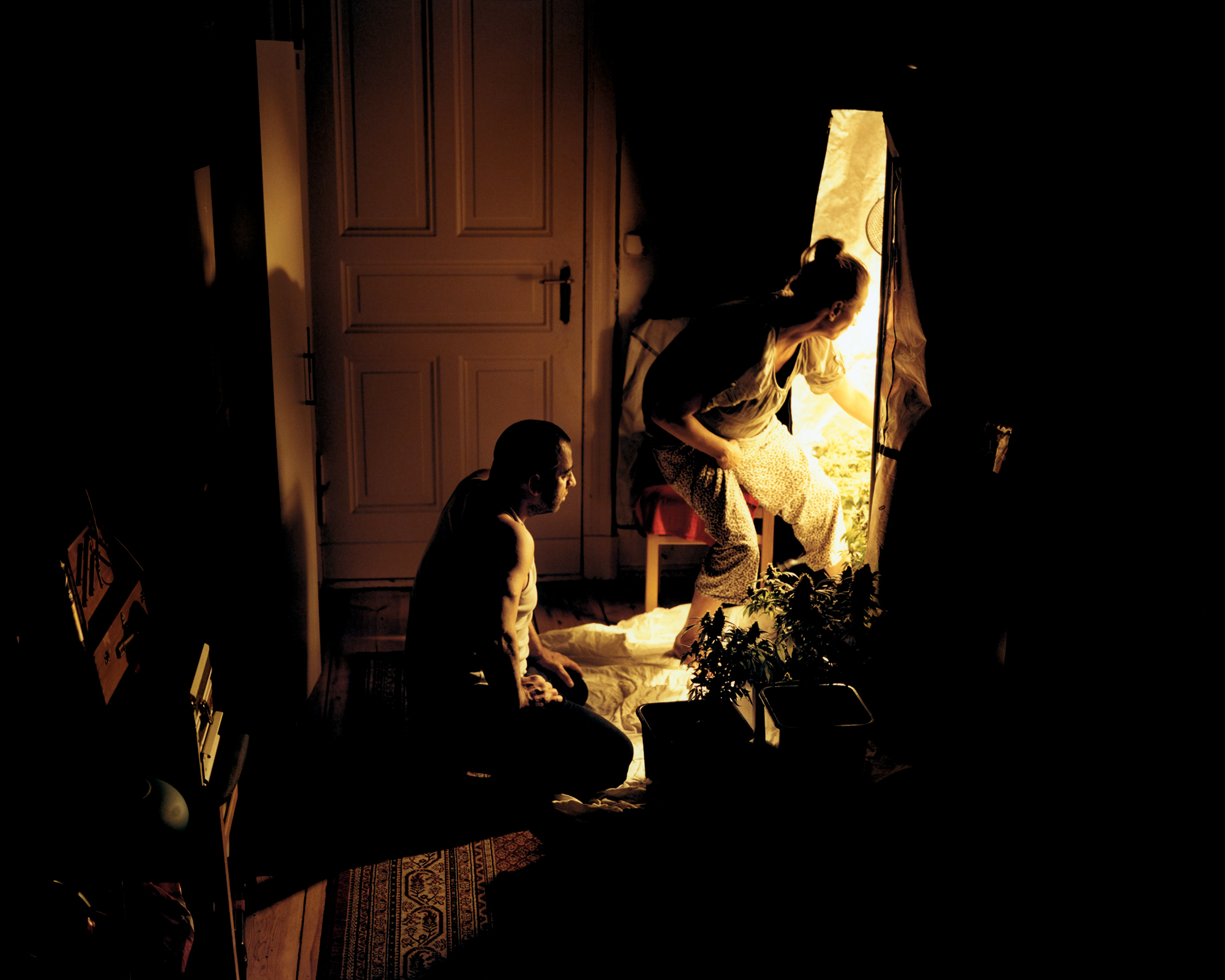
A new generation of photographic artists is now experimenting with analogue colour photography in a spatial way, exploring its sensitive surfaces and activating its emotional frequencies. In this context, the darkroom is more than just a place of photographic production: it becomes a space for reflection, where experiences, relationships and memories are first processed, transformed and made tangible while they are still latently visible.
AKOSUA VIKTORIA ADU-SANYAH – RESIDUAL SKY UNDER CONTAMINATION
German-Ghanaian artist Akosua Adu-Sanyah (born 1990) is known for her large-format, expansive and constantly evolving analogue works, in which she pushes the boundaries of photography through manual and chemical procedures. ‘In photography, I am interested in dissolving hierarchies in the handling of material,’ says the artist about her physical and spatial practice. Adu-Sanyah transfers the unfixable states in the photographic process, which are otherwise only visible in the darkroom, into the exhibition space, bringing us into contact with the unseen, the processual nature of photography.
The gaze moves across photochemical surfaces and finds stitched scars in the material. ‘My processes often begin as attempts to repair something or to establish a relationship with what is broken and irreconcilable.’ Neither temporally nor materially are these photographic works statically fixed – rather, the image with its sensitive surface remains mobile, expands, is broken down into its individual parts and reassembled. In her examination of historical images from photographic archives from her father's birthplace in what is now Ghana, Adu-Sanyah opens up new spaces in her search for an alternative narrative, removing skies and treetops from their colonial contexts. It is a work ‘with and against the archive,’ as American writer Saidiya Hartman describes it. In Hamburg, the artist presents around 30 new large-format works that lean against and into the exhibition space in an installation-like manner.
ABDULHAMID KIRCHER – ROTTING FROM WITHIN
In his analogue photographic practice, German-Turkish artist Abdulhamid Kircher (born 1996) explores possibilities for reconciliation, questions of intimacy, and the effects of patriarchy and violence. His works can be read as a fragmentary family album, telling of Kircher's ambivalent relationship to his own history and origins. As a living archive, the presented works give shape to the relentless, aggressive and violent – but also to the resistant and intoxicating. Kircher reverses the absence of his father in his life and lets him appear in his works as the main and pivotal figure. In his new works created for Hamburg, the artist also deals with the death and patriarchal legacy of his paternal grandfather.
The deeply personal aspect of Kircher's practice is also reflected in his site-specific approach – his installation includes photographs taken by him as well as archive images and biographical artefacts, which are printed on site, vary in format and lend fluidity to the seemingly static medium of photography. He impressively demonstrates how photography can be used as a fragile medium to get in touch with one's own emotions and to construct and deconstruct notions of power, control and strength using the example of the central male protagonists.
This exhibition is curated by Nadine Isabelle Henrich.