What Does Justice Look Like?
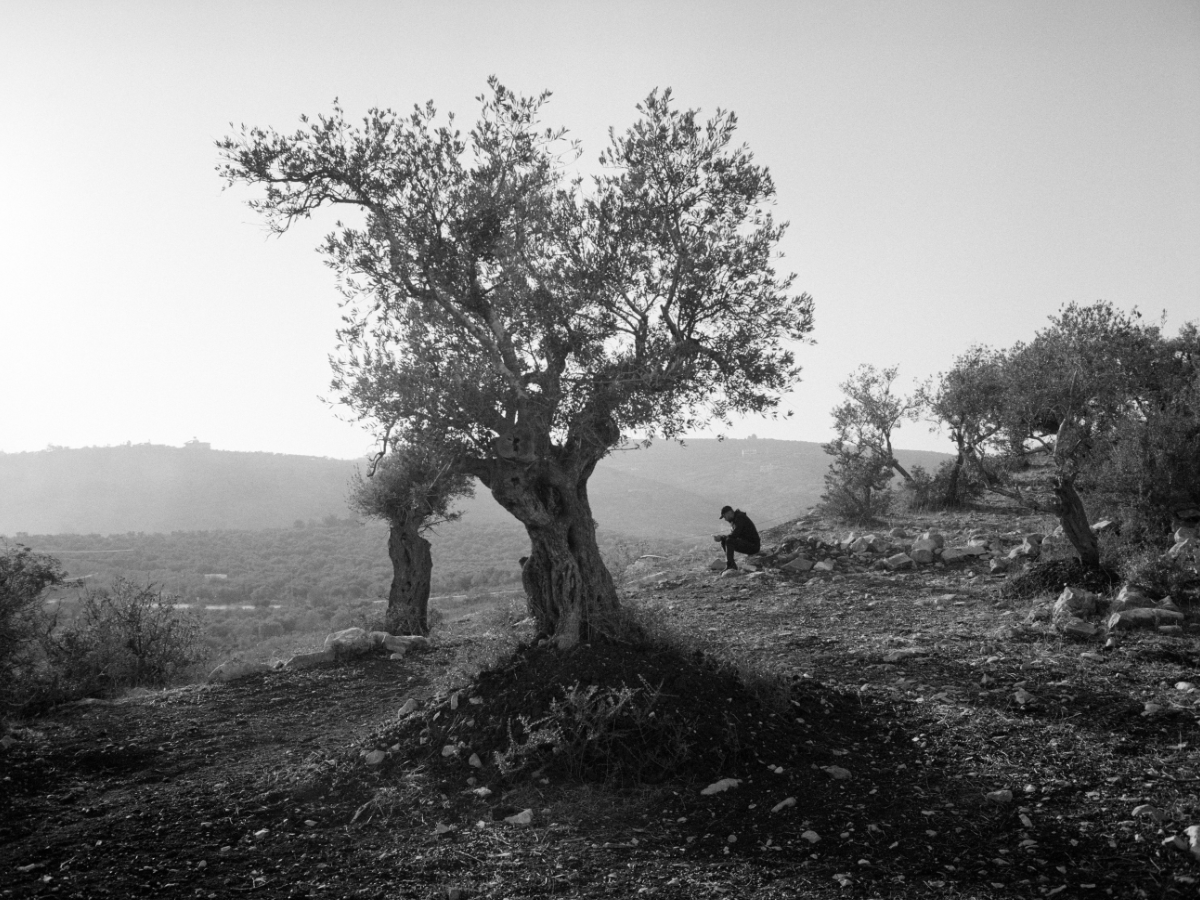
At the conclusion of the opening session for the symposium in November 2025, a central question emerged: what does justice look like? To continue this critical inquiry, this event, organised in partnership with the ECCHR, invites artists and audiences to reflect on how photographs not only depict potential realities but also actively shape perceptions of power, history, and human value.
The event further examines who can create impactful images with what kind of legitimacy and how justice operates within visual and political contexts. It also considers how audiences respond to images that claim space and justice for marginalised groups, whether justice can be encapsulated in a single frame, or whether it is something that is continually negotiated – and shaped by the image-maker’s agency and urgency.
This event was organised In collaboration with the European Center for Constitutional and Human Rights (ECCHR), an organisation dedicated to enforcing political, social, and economic human rights and litigates cases on behalf of collectives all over the world. Founded in 2007 by Wolfgang Kaleck and other international human rights lawyers, it uses legal means to initiate legal and political interventions.
Wolfgang Kaleck has served as secretary general of the European Center for Constitutional and Human Rights (ECCHR) in Berlin since 2008. He is the author of several books, including Concrete Utopia: Looking Back into the Future of Human Rights (2024) and Law versus Power (2018), and, more recently, Die Stärke des Rechts vs. Das Recht des Stärkeren – The Power of the Law vs. The Law of the Powerful (2026). Kaleck, who has received numerous awards (including the Hermann Kesten Prize from the PEN Centre Germany), has been working on numerous projects with the Academy of Arts in Berlin, the Haus der Kulturen der Welt, the Magnum Foundation, Autograph ABP, and other cultural institutions for years.
Yazid Anani is the chief curator of the Hayy Jameel Centre for Art and Creativity in Jeddah, Saudi Arabia. From 2016 to 2024, he served as chief curator and programme director at the AM Qattan Foundation in Ramallah. His curatorial practice spans architectural discourse, visual culture and social research.
Jasmina Cibic is a Slovenian artist working across film, installation, photography, and sculpture. She represented Slovenia at the 55th Venice Biennale and has presented solo exhibitions at BALTIC Centre for Contemporary Art, macLyon, Museum der Moderne Salzburg, Museum of Contemporary Art Belgrade, CCA Glasgow, and Kunstmuseum Krefeld. Her work has also been included in group exhibitions at venues such as MoMA New York, MAXXI Rome, and the Chicago Architecture Biennial.
Sakir Khader is a Palestinian-Dutch documentary photographer and filmmaker. In his work, he documents life in conflict zones with a raw yet intimate perspective on everyday life, loss and quiet resistance. Since 2021, Khader has been photographing in Palestine, including in Beita, Jenin and Nablus, where parts of his family live. His long-standing relationships with those he portrays shape images that reveal the emotional and physical strains of life under occupation. Khader has been a nominated member of Magnum Photos since 2024.
Sara Sallam (b. 1991) is a multidisciplinary artist who grew up in Egypt and today lives in the Netherlands. She holds a BA in Media Design from Cairo, and MAs in Documentary Photography in London and in film and photographic Studies in Leiden. Sallam’s work has been featured in numerous international exhibitions, including at the Medelhavsmuseet in Stockholm (2025), the Museo Egizio in Turin (2024 and 2022), the Art & History Museum in Brussels (2023), the Magnum Foundation in New York (2022), and the Sharjah Art Foundation (2021).
Moderation: Siri Keil
Ticket information: Admission to this event is free of charge.