Hamburger Kunsthalle
BUT I WORLD I SEE YOU*
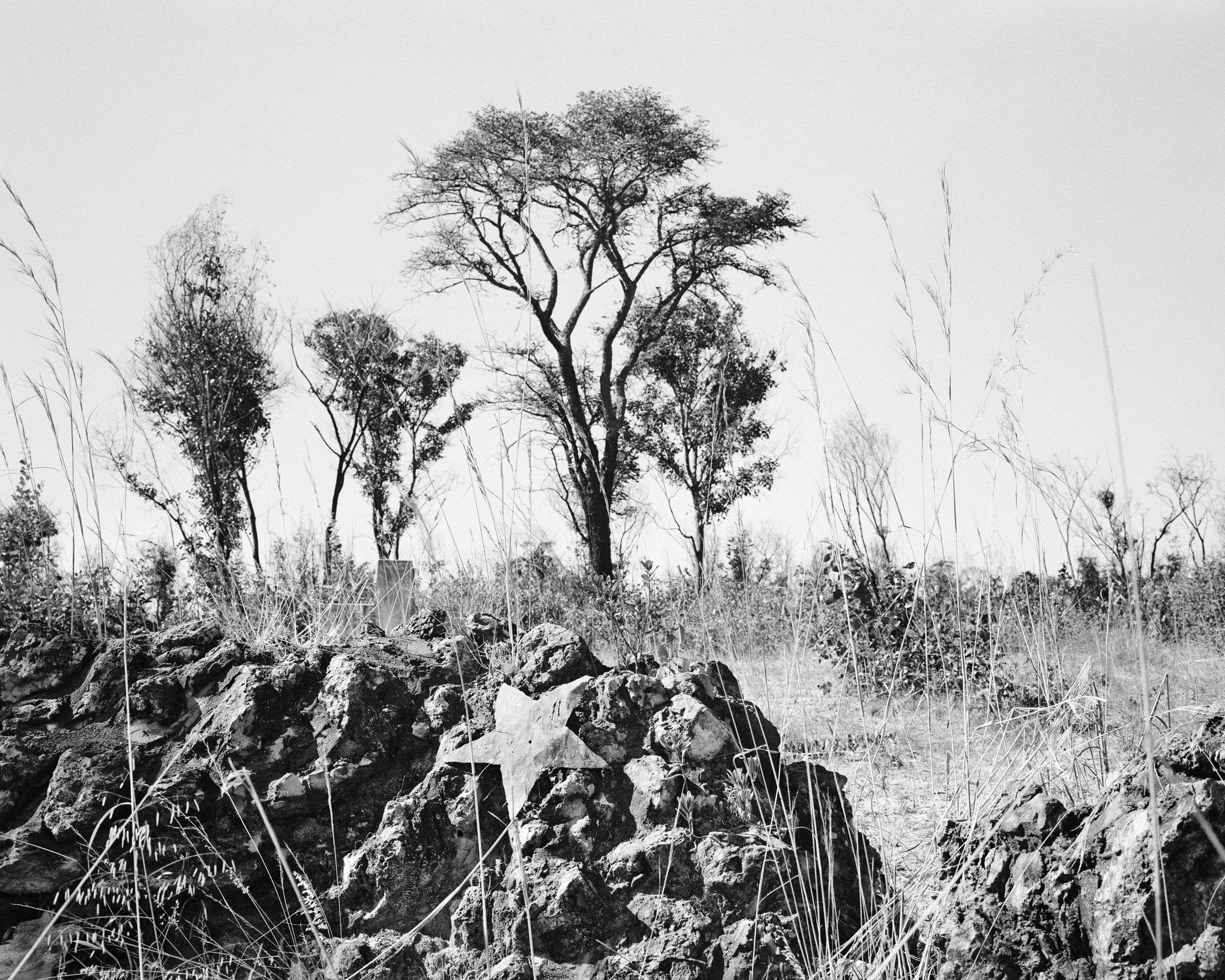
This exhibition’s opening section seeks to decipher (sepulchral) landscapes imbued with historical memories and informed by personal experience, myth, and ideology, and to examine how significance affects the images’ overall latent meanings. Images on display include Henry Fox Talbot’s The Haystack (1844), which also features a leaning ladder; Henri Becquerel’s scientific images Phosphorescences invisibles and Beta Ray; an image of a ladder and a sentry blown up and imprinted on a wall by the flash of the atomic bomb dropped on Hiroshima; Hiromi Tsuchida’s Camphor Tree 700 Meters from the Epicentre; On Kawara’s Thanatophanies; Santu Mofokeng’s traumatised and polluted landscapes in which human and geographical bodies are forced to undergo a gradual metamorphosis; and Jo Ractliffe’s depictions of Angola’s landscapes and leftovers in Terreno Ocupado and As Terras do Fim do Mundo.
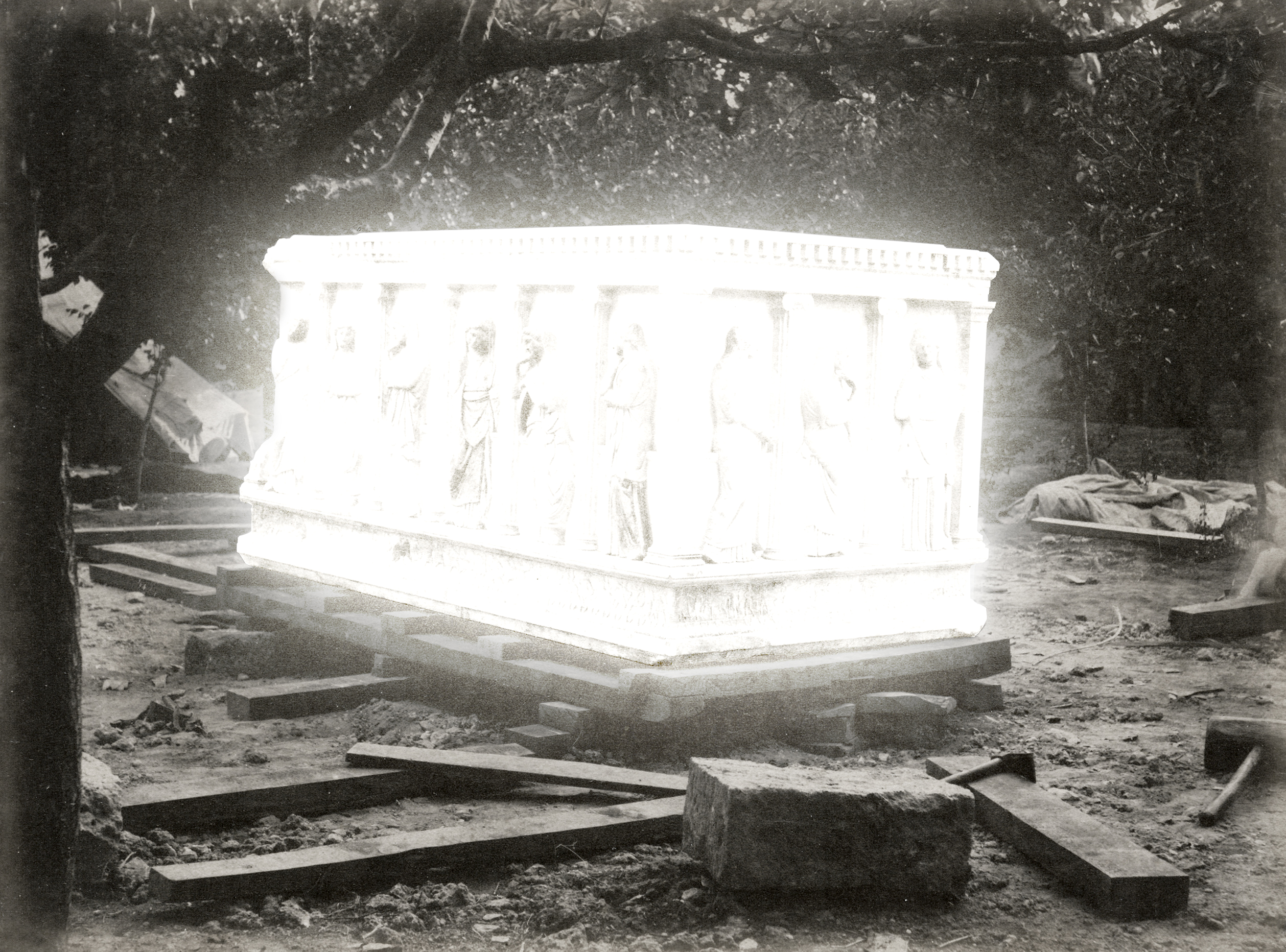
The haystack – a campaign recitative – reveals the very regime of appearance of objects whose vertigo Duchamp’s ready-mades will accomplish, for there is a kinship between ready-mades and photography that is both obvious and obfuscated. The exhibition’s second section explores how artists such as Marcel Duchamp, Alfred Stieglitz, Richard Hamilton, Marcel Broodthaers, Witkacy, Gustav Metzger, Dieter Roth, Tacita Dean, Sherrie Levine, Emilio Prini, Fischli & Weiss, Aglaia Konrad, and Saher Shah use drop shadows, optical devices, and photographic appropriation to record the states of forms and serve as a matrix, a constitutive vehicle for the organization of ideas, for an ecology of attention.
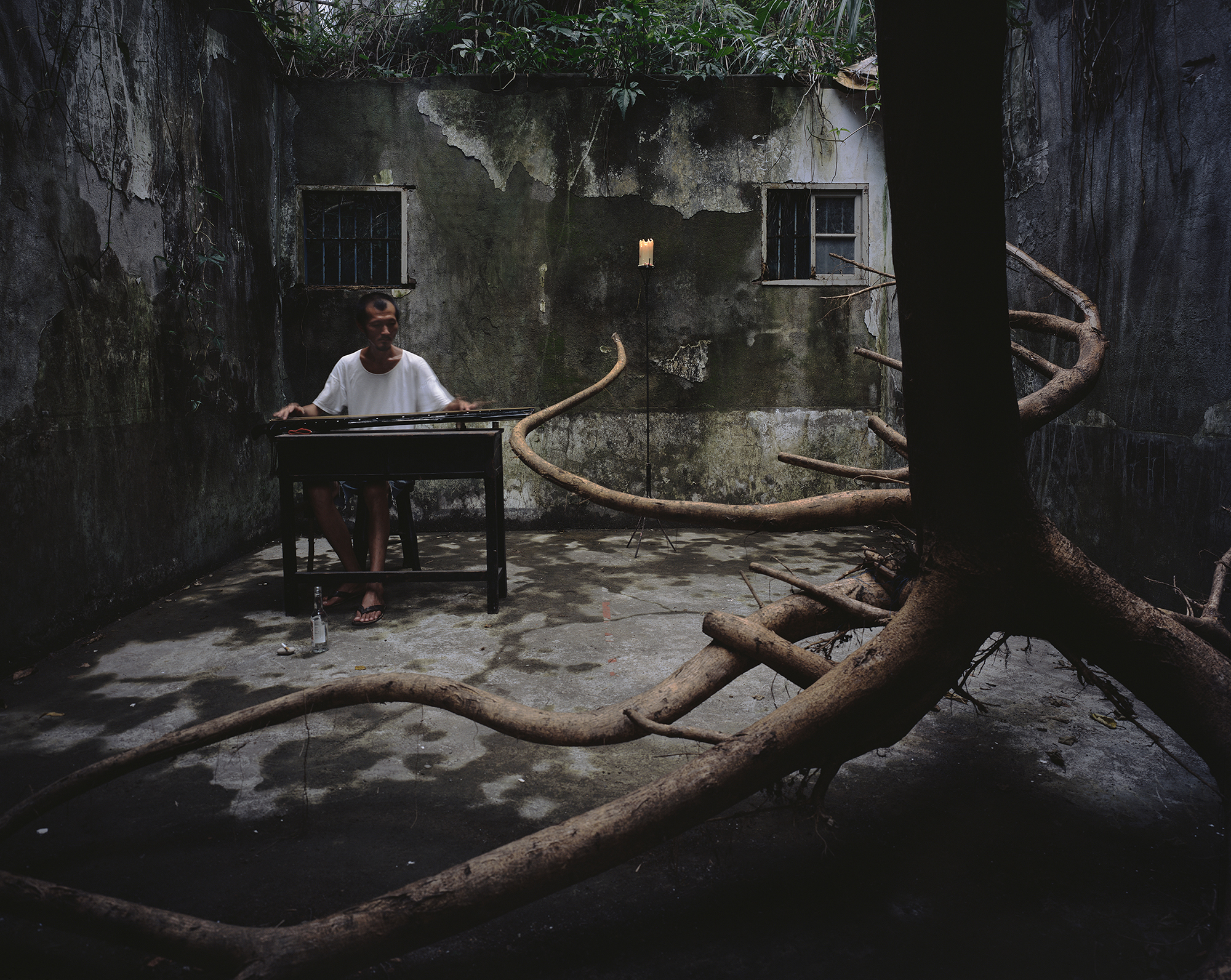
The exhibition’s third and closing section concentrates on protocols, image treatment, and the production of objects of historical and poetic evocation – or how artists investigate and translate constitutive gestures, photographic or archaeological material, and artefacts within their own practice – that establish new relationships with memory, intimacy, and the archive. By tracing, activating, and entwining sources, these artists question the status of the image and “reinterpret what art does or what makes art” (Jacques Rancière). Through offering embodied and emotional experiences where aesthetics and politics are inseparable, their artworks make visible the interplay between colonial histories and the present day, labor and traditions, and documents and the imagination. This section features the work of artists such as Tina Modotti, Bahman Jalali, Hannah Darabi, Akram Zaatari, Sigmar Polke, Karimah Ashadu, Mario García Torres, Yeh Shih-Chiang and Yeh Wei-Li, Saâdane Afif, Rosa Barba, and Khadija Saye.
For this exhibition, curated by Dr. Corinne Diserens with Leona Marie Ahrens as assistant curator, Hamburger Kunsthalle is collaborating with the Kampnagel International Summer Festival 2026 on a presentation of Nan Goldin’s slideshow from the museum’s collection and a series of performances.
Preview